Tent Basics, Tent Manufacturers
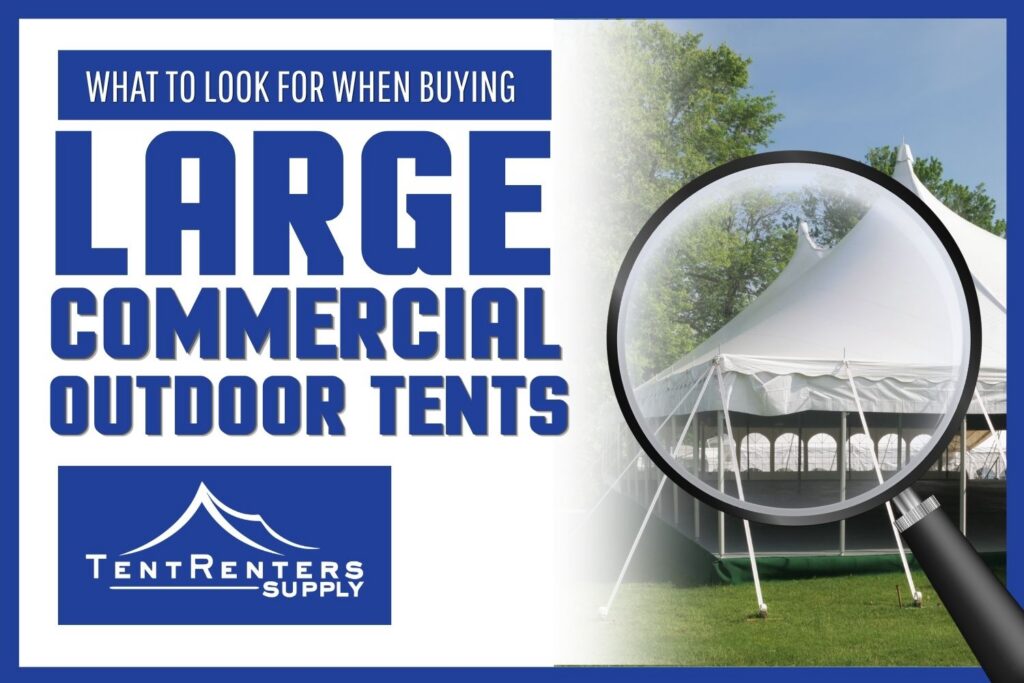
What to Look for When Buying Large Commercial Outdoor Tents
Jul
Buying a commercial outdoor tent isn’t the same purchase as picking up a tent for a backyard party. Rental companies need equipment that can go up and come down hundreds of times a year, hold up under real wind loads, and meet the compliance standards that large public events actually require. Whether you’re building out inventory for the first time or expanding to meet growing demand, here’s what to evaluate before you buy.
Why Commercial Outdoor Tents Are a Different Purchase Than Consumer Tents
A tent built for a single backyard event and a tent built for a rental fleet are engineered to completely different standards.
Built for Repeated Use, Not a Single Event
Consumer-grade tents are designed to survive a handful of uses before they’re thrown away. Commercial tents need to withstand repeated setup, takedown, transport, and storage cycles across dozens or hundreds of events a year without the frame bending, the fabric tearing, or the hardware wearing out.
The Load-Bearing and Wind Rating Difference
Commercial tents are engineered around specific load and wind rating requirements, which is what actually determines whether a tent can be used safely at a given event. A tent without a documented wind rating isn’t just a quality gap. It’s a liability gap the moment weather turns.
Why Compliance and Certification Matter from Day One
Many event venues, municipalities, and insurance carriers require documentation before a tent goes up, not after something goes wrong. Buying a tent without established compliance credentials means finding out about a problem at the worst possible time: on-site, with a client’s event already underway.
Frame and Structure: What to Evaluate First
The frame determines how a tent performs under load, how quickly your crew can set it up, and how long it lasts in your rotation.
Aluminum vs. Galvanized Steel Frames: Pros and Cons for Rental Operations
Aluminum frames are lighter, easier for crews to handle, and more resistant to corrosion, which makes them a strong fit for operations that value faster load-in and load-out. Galvanized steel frames are heavier but offer added strength and rigidity, which some operators prefer for larger structures or high-wind regions. The right choice depends on your crew size, your typical event scale, and how often the tent is moved between locations.
How Frame Design Affects Setup Time and Crew Requirements
Frame design has a direct impact on labor cost. Connectors, pole configurations, and top attachment systems that are intuitive and consistent across your inventory cut setup time and reduce the training curve for new crew members. A frame that requires specialized tools or an unusually large crew adds hidden cost to every single rental.
Size Range and Modularity: Can Your Inventory Scale with Demand?
Modular frame systems, where components from one size can be reconfigured or combined with another, give rental companies more flexibility to meet varying event sizes without buying a separate tent for every possible configuration.
Fabric and Material Specifications That Matter
The fabric is what your clients and their guests actually see, and it’s also where cheaper tents most often fall short.
CPAI-84 and NFPA 701 Fire Ratings: What They Mean and Why You Need Them
CPAI-84 and NFPA 701 are the fire resistance standards most commonly required for tents used at public events. These certifications confirm that the fabric has been tested to resist ignition and slow the spread of flame. Many imported, budget-priced tents either skip this testing entirely or use documentation that doesn’t hold up to scrutiny, which puts the liability squarely on the rental company using the tent, not the manufacturer who sold it.
UV Resistance, Waterproofing, and Vinyl Weight
Heavier vinyl weights generally correlate with better UV resistance, waterproofing, and long-term color retention. Lighter, cheaper vinyl fades faster, becomes brittle under sun exposure, and is more prone to seam failure over repeated use.
Why Fabric Quality Affects Long-Term ROI More Than Purchase Price
A lower-cost fabric that needs replacing after two seasons costs more over time than a heavier-grade material that lasts five or more. When you’re comparing tents, the sticker price is only part of the equation.
Sizing Your Commercial Tent Inventory for the Events You Actually Service
The right tent size isn’t a fixed number. It depends on the mix of events your business actually books.
How to Match Tent Size to Guest Capacity and Event Type
Standard planning guidance runs roughly 10 to 15 square feet per seated guest and closer to 6 square feet per standing guest, though layout, dance floors, staging, and catering stations all add to that footprint. Matching your inventory to your typical client’s event type, not just guest count, keeps you from under- or overbuilding.
Why Peak Outdoor Event Season Exposes Inventory Gaps Faster Than Any Other Time of Year
Inventory gaps that go unnoticed in the slower months become obvious fast once peak season hits and multiple events need the same size tent on the same weekend. Reviewing your size mix before demand spikes gives you time to fill gaps instead of scrambling for a rush order.
The Case for Stocking Multiple Sizes vs. Going All-In on One
Concentrating your budget in a single size limits which events you can service. A broader spread across a few key sizes typically books more consistently across a wider range of client requests.
Buying Direct from a US Manufacturer vs. a Distributor
Where you buy affects price, lead time, and how well-supported you are once the tent is actually in your inventory.
Lead Times, Custom Options, and Ongoing Parts Support
Buying direct from the manufacturer typically means shorter lead times and more flexibility on custom sizing, colors, and branding, since there’s no distributor markup or middleman communication delay involved.
What American-Made Means for Compliance and Quality Consistency
American-made commercial tents are manufactured to domestic fire safety and engineering standards from the start, which means the compliance documentation your business needs is already built into the product rather than something you have to chase down after the fact.
Why the Relationship With Your Manufacturer Matters Long-Term
A rental business’s tent inventory is a long-term asset, not a one-time purchase. Working directly with a manufacturer who understands your business means faster access to replacement parts, easier reorders as you scale, and a partner who’s actually invested in how your inventory performs over years, not just at the point of sale.
Shop Large Commercial Outdoor Tents at Tent Renters Supply
Tent Renters Supply has manufactured commercial tents in the USA for more than 45 years, built to meet the fire safety and wind rating standards that large events actually require. Whether you’re building out your first commercial inventory or adding sizes to meet growing demand, our team can help you spec the right tent for your business. Shop our commercial tent inventory today or read more on why buying American-made pays off for your rental business.
